Intarsia
To learn how to knit intarsia , you can attend one of the Advanced Knitting Workshops - bookable here. You must have already completed the Knitting Machine Induction to attend.
Intarsia is a knitting technique used to create patterns with multiple colours. Unlike other multicolour techniques (such as Fair Isle), there is only one "active" colour on any given stitch, and yarn is not carried across the back of the work; when a colour changes on a given row, the old yarn is left hanging. This creates pieces with no floats along the reverse side. This also means that each row can contain as man colours as you want (though is gets more fiddly and complicated the more you add)
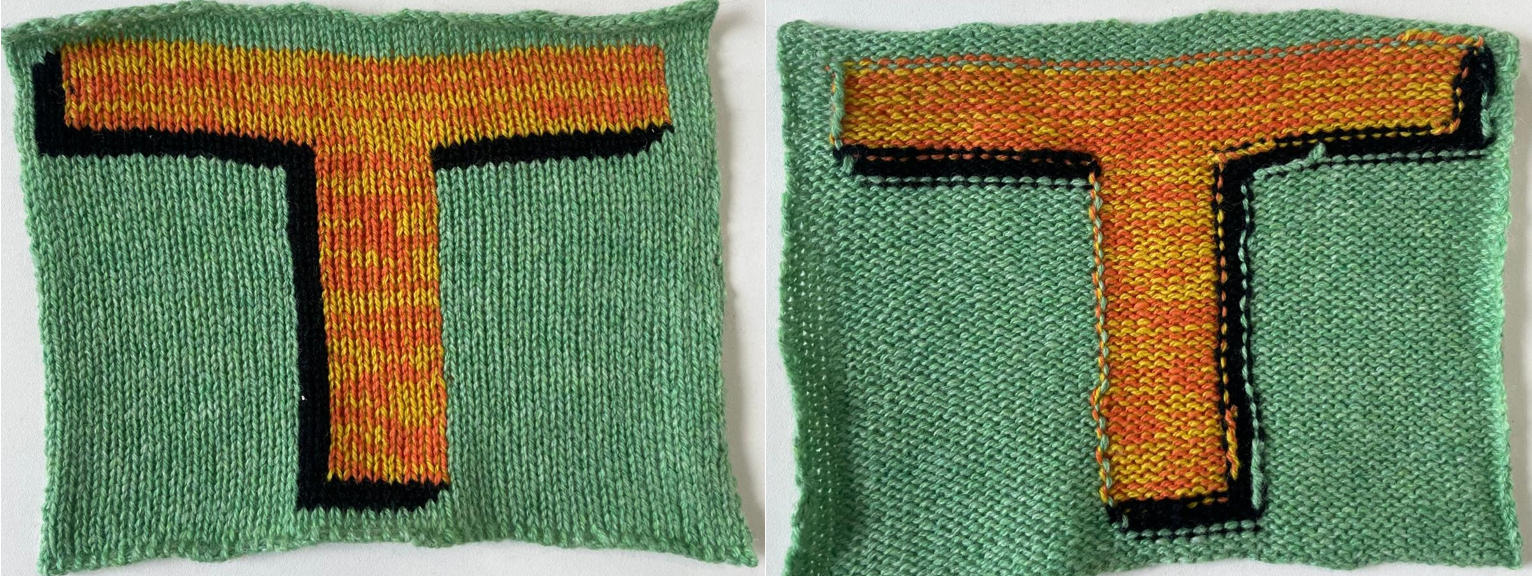 Intarsia has no floats on the reverse side and can contain more than 2 colours per row
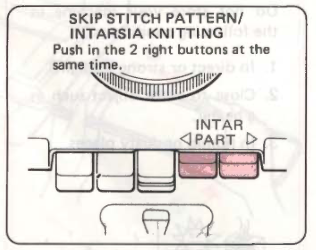
In order to knit intarsia, wethere haveare a couple of settings that need to usebe an alternate carriage, pictured below. When knitting with this carriage, the yarn is not threading into the auto tension. Instead, the cones are placedchanged on the groundcarriage, beneathwhich can be seen below. These need to be changed at the machine.correct time during knitting so follow the instructions below.
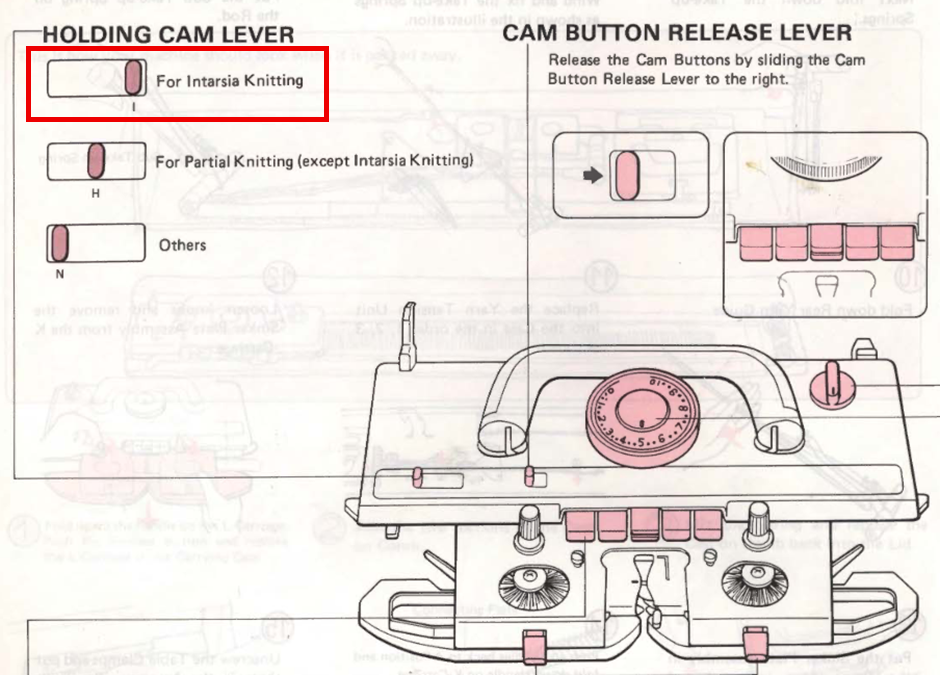
LearningKnitting Intarsia
To learn how to use the intarsia carriage, you can attend one of the Advanced Knitting Workshops - bookable here. You must have already completed the Knitting Machine Induction to attend.
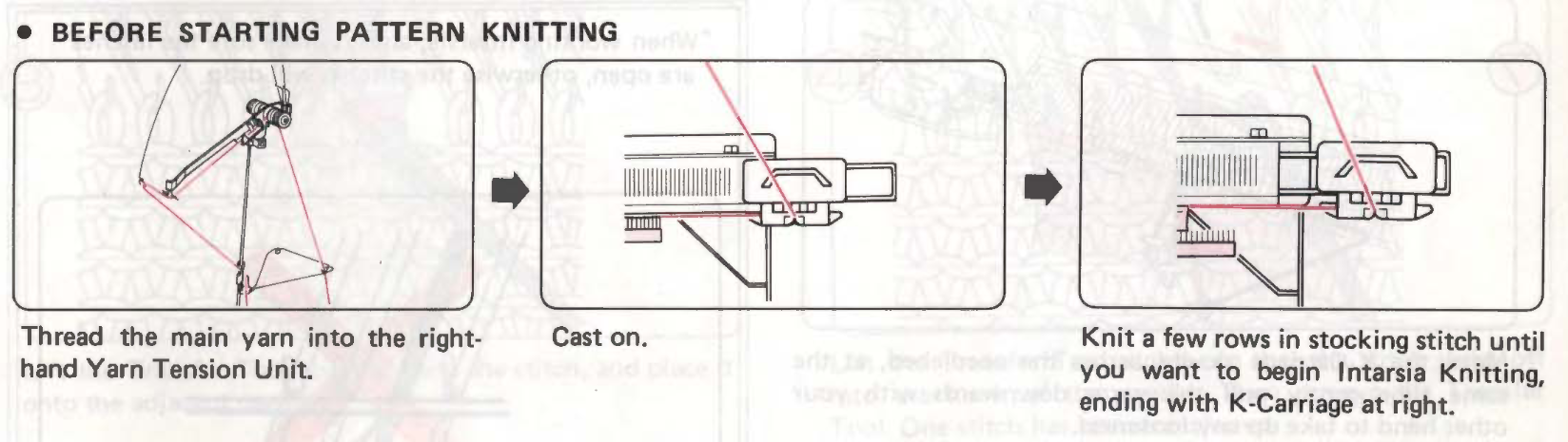
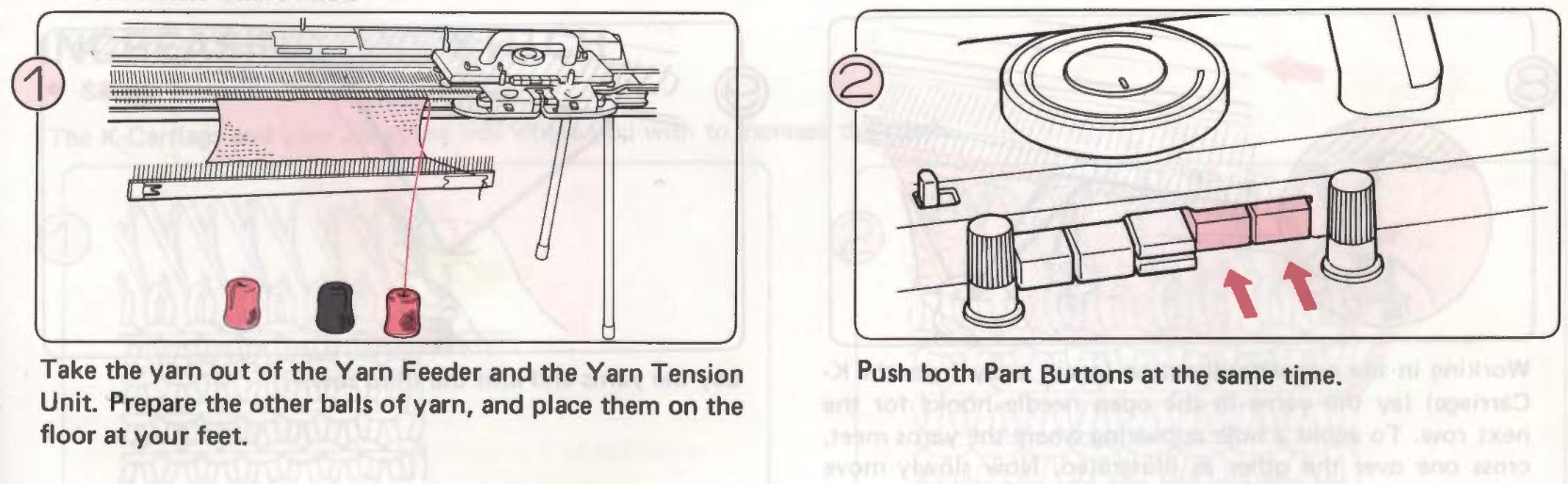
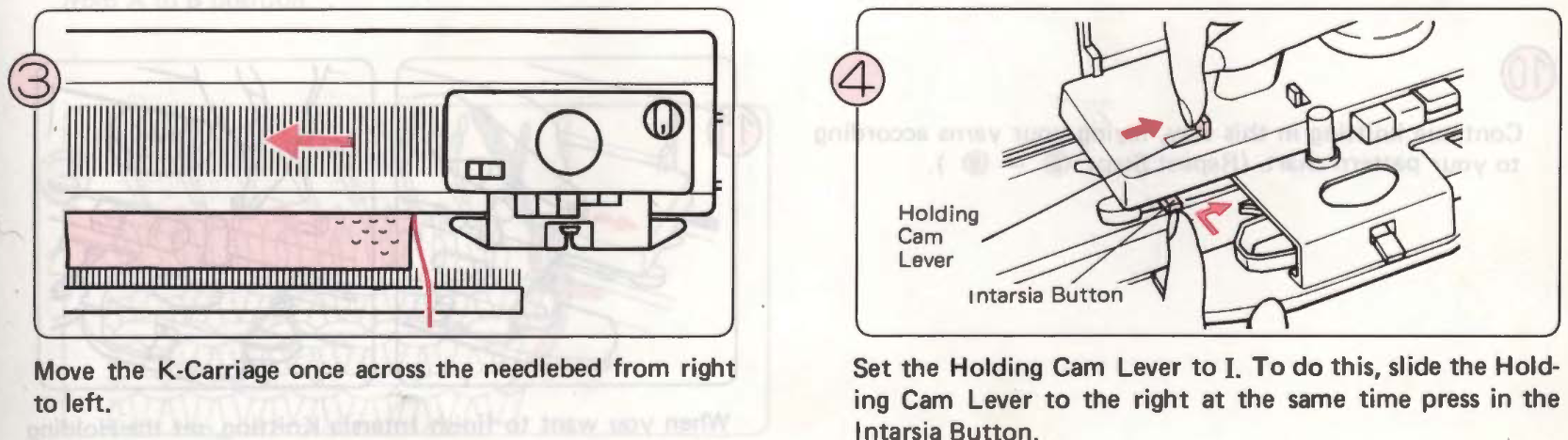
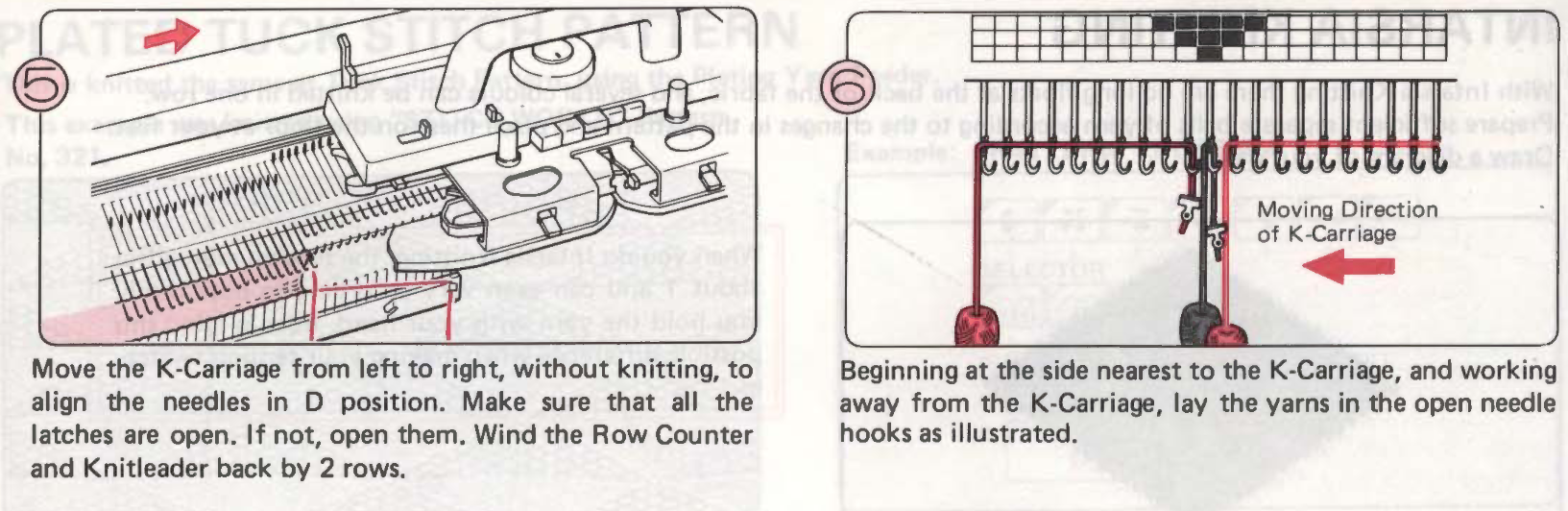
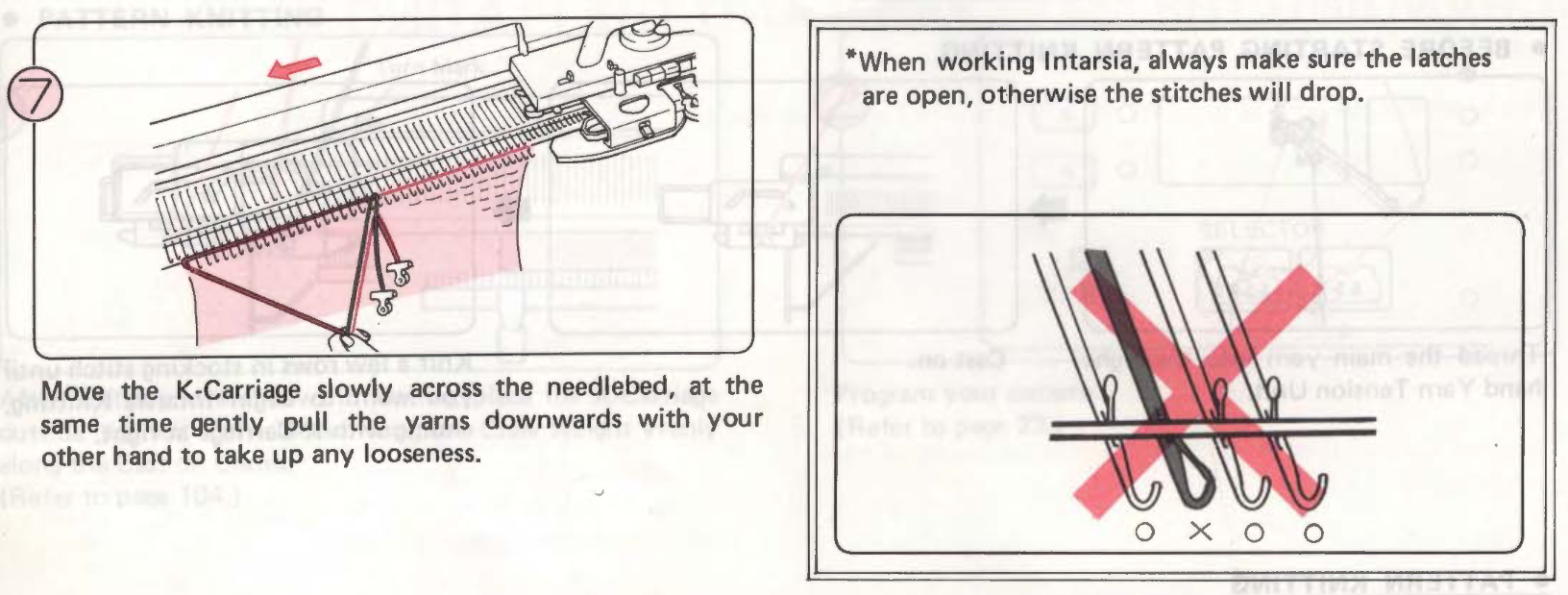
To cast on, use the main carriage and knit at least one row of stockinet.Remove the yarn from the auto tension and place the yarn cone on the floor. Remove the main carriage from the bed.Place the intarsia carriage on the bed from the side without the yarn

Move the intarsia carriage across the needles in B position, without knitting, and the needles will be aligned into C position (see below).

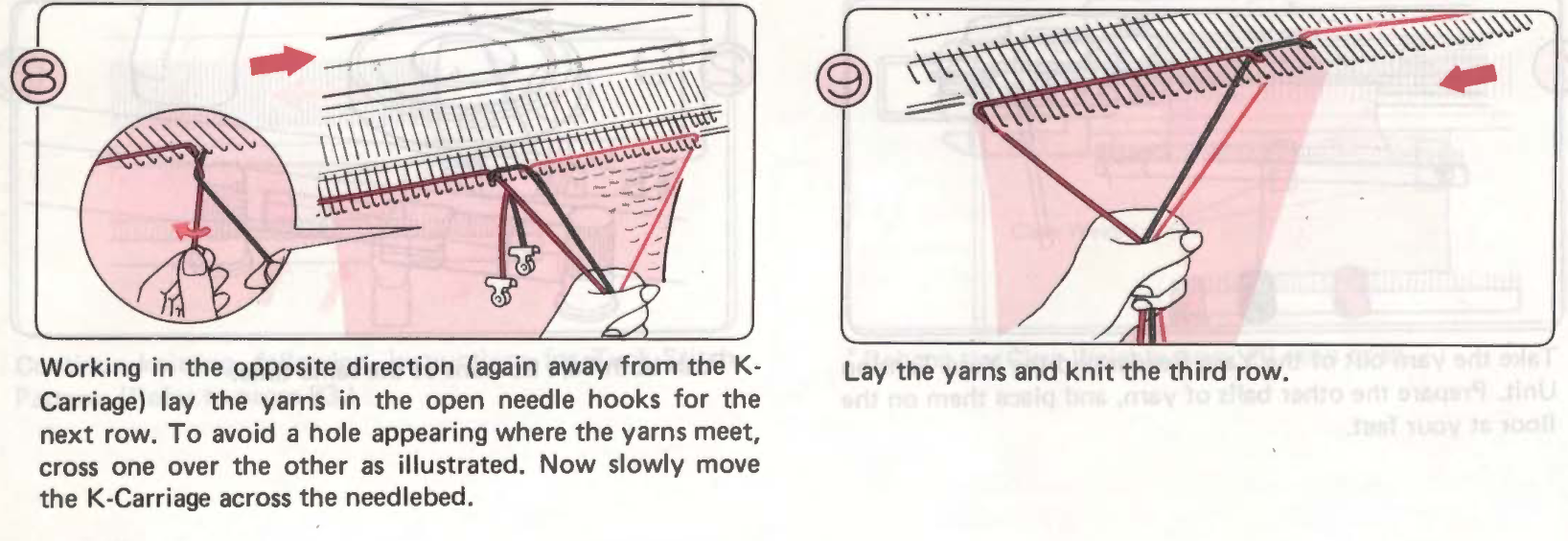
Lay the yarns inside the needle hooks starting from the carriage side as illustrated.Holding the yarns down to take up slack yarn, move the carriage slowly across the needles, to knit the first row.
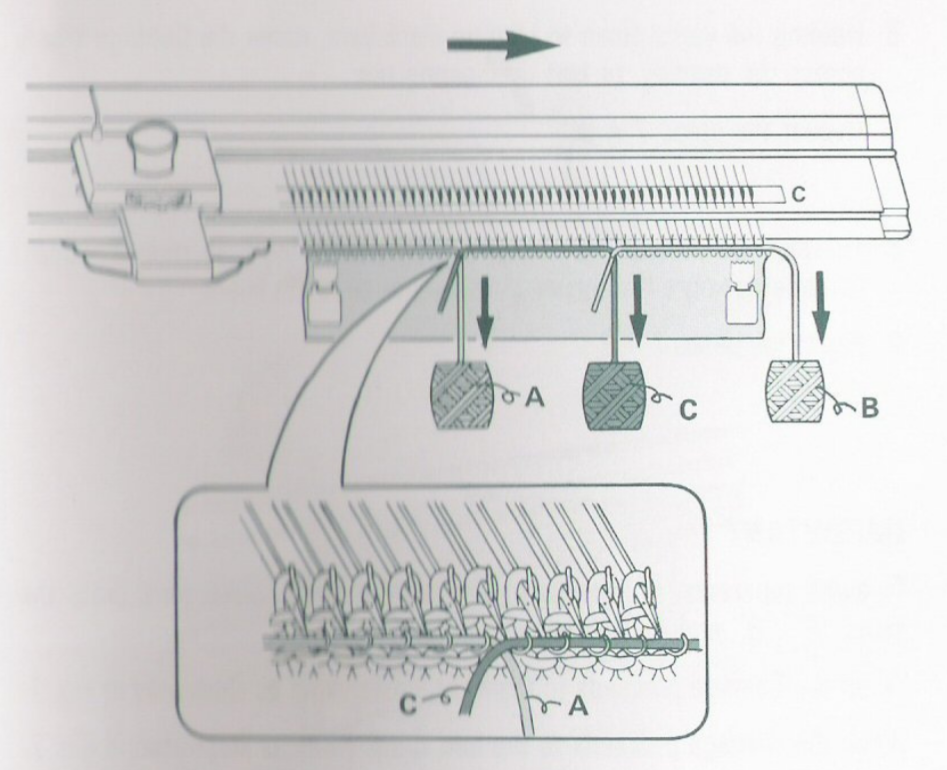
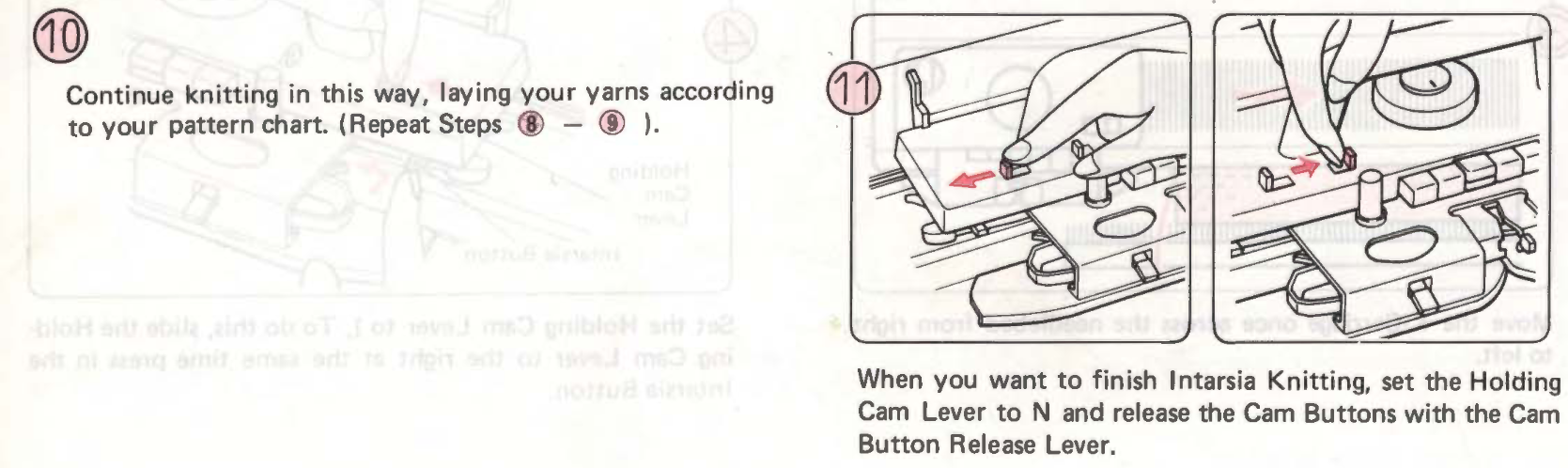
Repeat this again for each row, laying the yarns inside the needle hooks starting from the carriage side, holding the yarns down to take up slack yarn, and moving the carriage slowly across the needles to knit.