
Maths
Trigonometry
Trigonometry is an area of maths that is all to do with triangles and the relationship between their side lengths and angles.
Radians
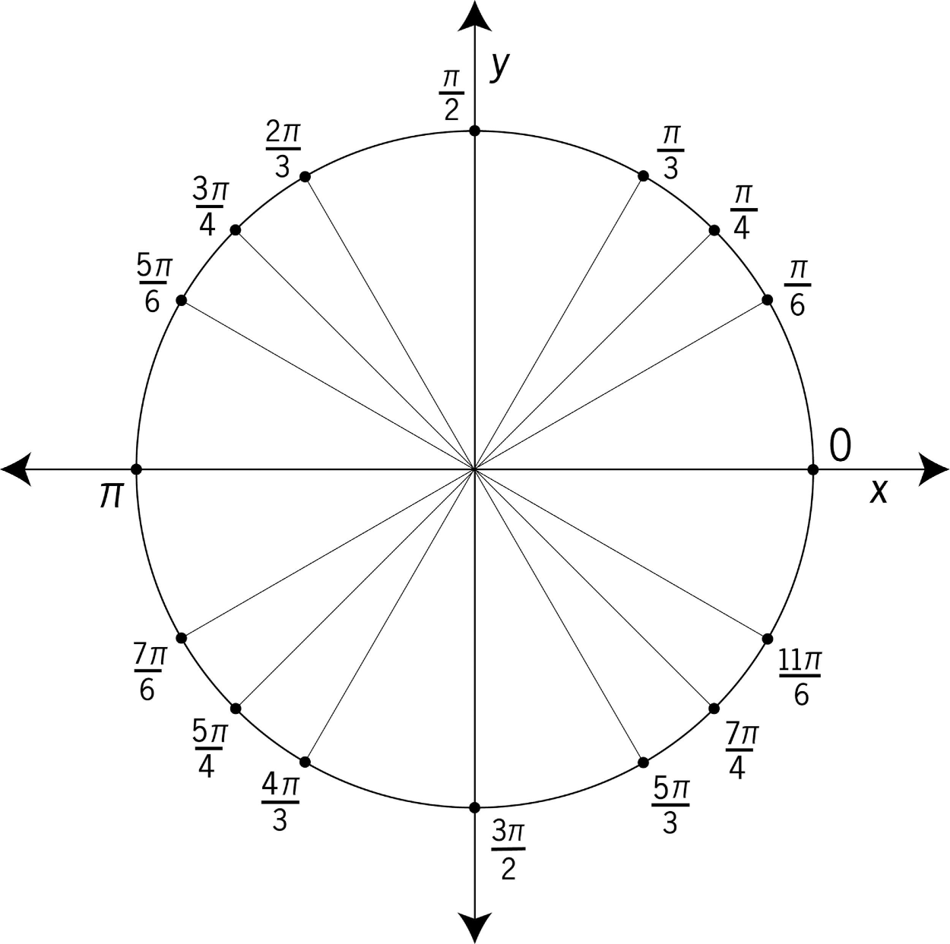
Radians are a unit of angular measurement, similar to degrees and is the unit generally used within trig. A full circle, 360 degrees, is equal to 2π radians.
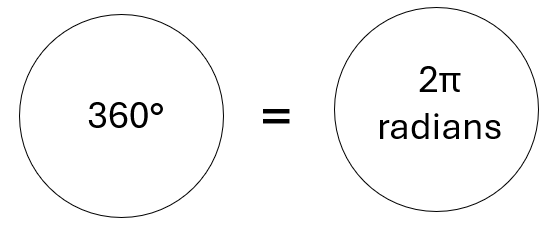
| Degrees | Radians |
|---|---|
| 0 | 0 |
| 90 | π/2 |
| 180 | π |
| 360 | 2π |
Right-Angle Triangles
Right-Angle triangles are at the centre of trig, so it's important that we understand which parts we are talking about.
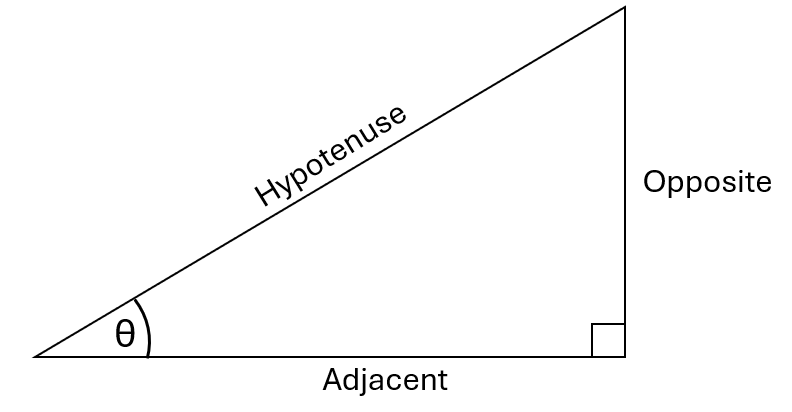
- Right-angle: Shown by the small square drawn around it
- The angle: By convention, labelled as θ
- Hypotenuse: The side opposite the right-angle
- Opposite: The side opposite the angle
- Adjacent: The side adjacent to the angle
Note: It doesn't matter which angle you label as θ as long as it isn't the right angle. This is because we know that all the angles in a triangle add up to 180° (or π radians) and we know the value of the right-angle. Therefore, the other angle can be found by calculating (180-90-θ).
Sine and Cosine
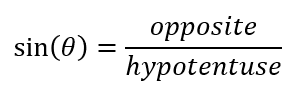
The trig functions sine and cosine are defined by the ratios between the sides of a right-angle triangle.
- Sine is defined by the ratio of the side opposite to the angle and the hypotenuse for a specific angle, 𝜃
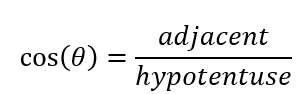
- Cosine is defined by the ratio of the adjacent side to the hypotenuse for a specific angle, 𝜃
Unit Circle
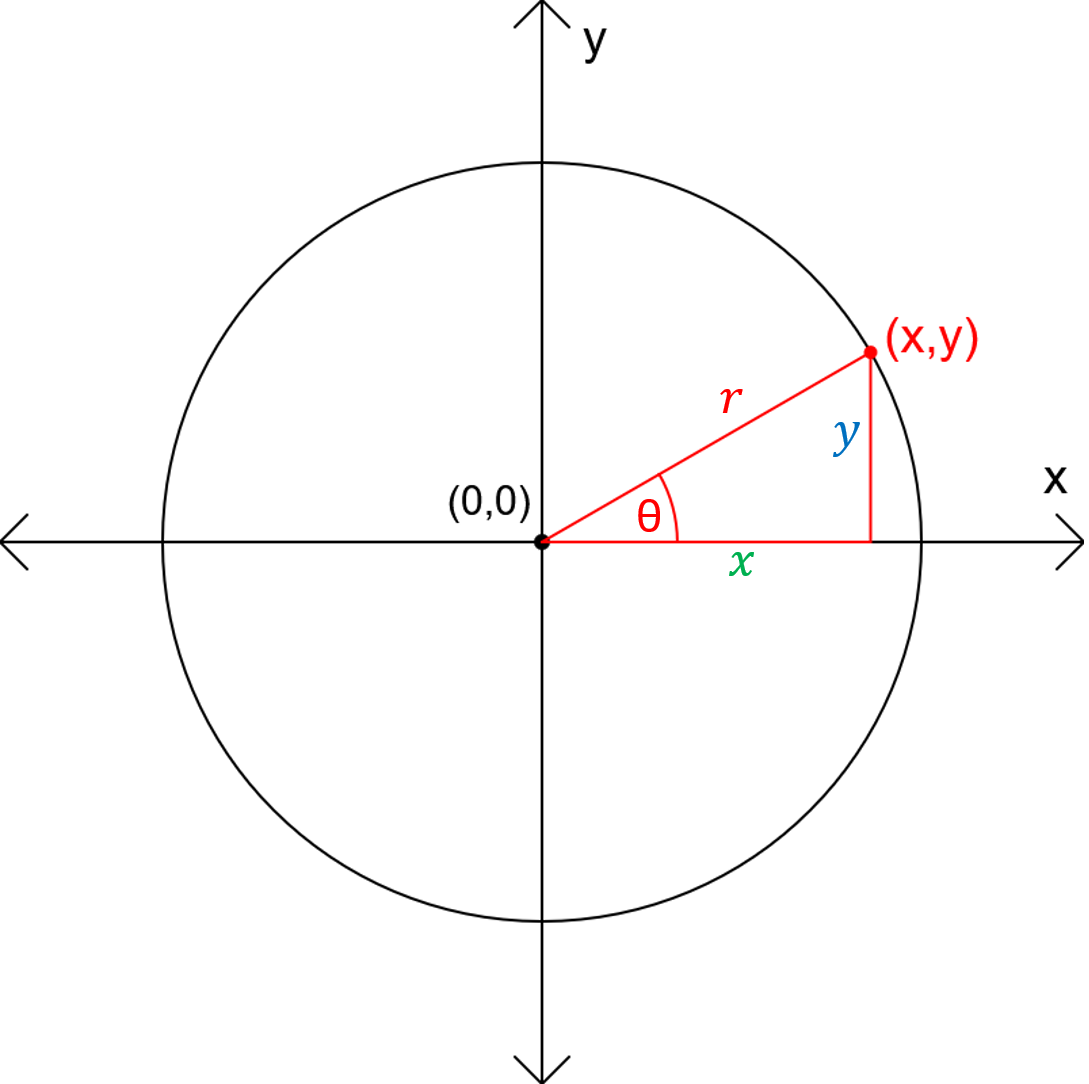
If we look at a generic right-angle triangle where the hypotenuse is the same length at the radius of a circle, we can see how trig can be used to calulate the x and y components of a point on a circle of radius r.
Notation
Subscript
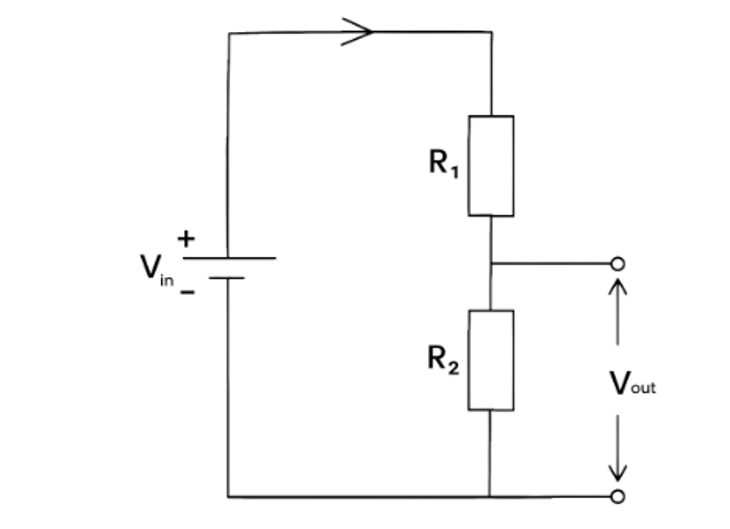
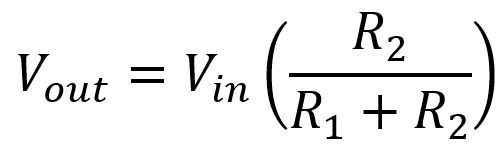
NOTE:Subscript (e.g. the 1 in R1) is used to differentiate between multiple value of the same quantity. For example, in the abovebelow equation,voltage divider circuit, there are two resistors. A value of resistance is denoted by R, therefore we label them as R1 and R2 so that we still know that we are referring to a value of resistance but we can tell them apart.
Multiplication
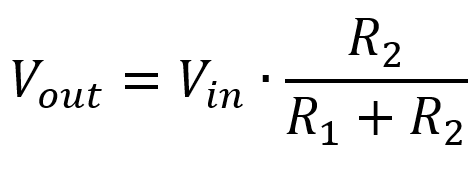
In the voltage divider equation below, there is a dot between two sections of the equation. This is a multiplication symbol and is exactly the same as when you see an 'x'. The reason we use this is because when you are doing alegebra, x is commonly used as a generic variable in algebra so to stop confucion, the dot is normallyused used.to stop confusion between the two.
You might also see thingsvalues putwritten in bracketsfront of a bracket with thenothing numberin writtenbetween. justThis beforeis thealso showing multiplication.
All three of the below notations are valid.
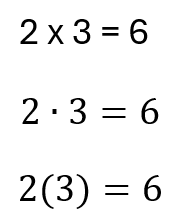
Thewhen equationworking abovewith showsvectors, it is best not to use the valuedot offor Voutmultiplication as this can be confused with a dot product, which is completely different. It is best to just put things in brackets or use an x if you want.